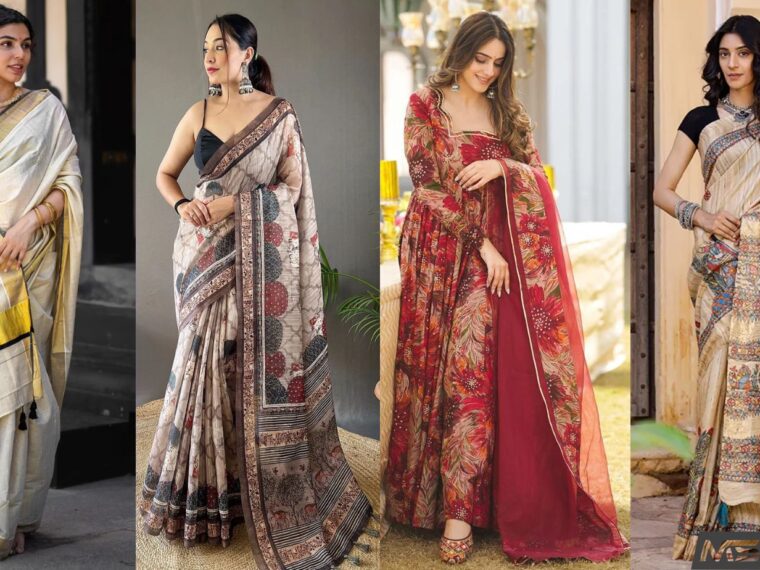
India’s diverse cultural heritage is exceedingly reflected in its traditional costumes. Each state boasts unique costumes, rich in colours, fabrics and styles, often regularly in historical and cultural significance. Here is a glimpse of Scroll down to see Traditional Outfit of men and women of all states in India.
1. Andhra Pradesh

Women: Sarees like Gadwal and Pochampally Ikat with intricate patterns.
Men: Dhoti (Panche) paired with an Angavastram.
Also read – Top 10 Christmas Party Outfit Ideas for 2024 – meghashop
2. Arunachal Pradesh

Women: Wrap Around skirt called Girl with vibrant designs.
Men: Monpa tribe-inspired woolen jackets and trousers.
Also read – Rakul Preet Singh’s Valentine’s Day Special Outfit Look with Ruffled Bustier and Embellished Skirt
3. Assam

Women: The elegant Mekhela Chador made from Assam silk.
Men: Dhoti with a simple kurta and a Gamosa (cotton scarf).
4. Bihar

Women: Tussar silk sarees, often handwoven.
Men: Dhoti-kurta, with an angavastram for formal occasions.
5. Chhattisgarh

Women: Lugda (saree) and Polkha (blouse), often bright and colorful.
Men: Dhoti and headgear like pagdi.
6. Goa

Women: Pano Bhaju, a traditional outfit for festivals.
Men: Half pants paired with a cotton shirt, reflecting Portuguese influence.
7. Gujarat

Women: Ghagra-Choli with mirror work and vibrant embroidery.
Men: Kediyu (a short, flared kurta) with dhoti or churidar.
8. Haryana

Women: Salwar-kameez with a colorful dupatta.
Men: Dhoti with a white kurta and a turban (pagri).
9. Himachal Pradesh

Women: Reshta (traditional long kurta) with embroidered woolen shawls.
Men: Woolen kurta with churidar, paired with a distinct Himachali cap.
10. Jharkhand

Women: Tussar silk sarees with tribal patterns.
Men: Simple dhoti-kurta, often accessorized with tribal jewelry.
11. Karnataka

Women: Mysore silk sarees known for their sheen.
Men: Dhoti (Panche) with a silk shirt and angavastram.
12. Kerala

Women: Kasavu saree, characterized by white with golden border.
Men: Mundu, a traditional white dhoti-like garment.
13. Madhya Pradesh

Women: Chanderi and Maheshwari sarees, prized for their elegance.
Men: Dhoti with a short kurta or jacket.
14. Maharashtra

Women: Nauvari saree, draped like a dhoti.
Men: Dhoti with a bandi (waistcoat) and a turban.
15. Manipur

Women: Phanek (wraparound skirt) with a Rani Phi shawl.
Men: Dhoti with a white kurta and headgear.
16. Meghalaya

Women: Jainsem and Dhara, made of handwoven fabric.
Men: Jymphong, a sleeveless jacket with a turban.
17. Mizoram

Women: Puan, a wraparound skirt paired with a blouse.
Men: Traditional coats with handwoven wraps.
18. Nagaland

Women: Vibrant shawls and skirts reflecting tribal patterns.
Men: Shawls with symbolic designs and headgear adorned with feathers.
19. Odisha

Women: Sambalpuri sarees, handwoven with traditional motifs.
Men: Dhoti with an upper garment (kurta or joda).
20. Punjab

Women: Bridal Salwar-Kameez with phulkari dupatta.
Men: Kurta-pajama with a turban, often vibrant and colorful.
21. Rajasthan

Women: Ghagra-Choli with heavy embroidery and mirror work.
Men: Dhoti-kurta with a colorful turban.
22. Sikkim

Women: Bakhu, a long dress tied at the neck and waist.
Men: Loose trousers and jackets, influenced by Tibetan styles.
23. Tamil Nadu

Women: Kanjeevaram sarees, celebrated for their grandeur.
Men: Dhoti (Veshti) with a simple shirt or angavastram.
24. Telangana

Women: Cotton and silk sarees like Pochampally and Gadwal.
Men: Dhoti with a kurta, often plain yet elegant.
25. Tripura

Women: Rignai, a wraparound cloth, and Risa as an upper garment.
Men: Dhoti with an upper cloth (rikutu).
26. Uttar Pradesh

Women: Banarasi sarees, intricately designed and luxurious.
Men: Kurta with churidar, often paired with a shawl.
27. Uttarakhand

Women: Woolen saree or Ghagra with a jacket.
Men: Woolen kurta-pajama with a traditional cap.
28. West Bengal

Women: Tant and Baluchari sarees, showcasing intricate craftsmanship.
Men: Dhoti with a simple kurta, often white.
Conclusion
India’s traditional costumes are a party of its wealthy records and cultural range. Each apparel tells a story, embodying regional pleasure and artisanal brilliance, creating a vivid mosaic of the kingdom’s history. These were the famous traditional costumes of all the states of India. Which one did you like?
Also read – SUHANA KHAN LOOKS ABSOLUTELY STUNNING IN GAURI AND NAINIKA’S FLORAL MINI DRESSES